
Even in a warm state like Florida, cooler mornings arrive each year and quietly test how well your garage door system is holding up. Metal parts contract, lubrication thickens, and any minor weakness that stayed hidden during hot, humid months can suddenly become evident for a busy homeowner, which can mean new noises, slower operation, or a door that feels different every time the temperature changes.
Because the garage often serves as a main entry, dependable operation matters as much as security and curb appeal. Choosing high-quality residential garage doors is a strong start, but understanding how cooler weather gradually affects springs, tracks, cables, and openers helps you plan rather than react to inconvenient failures years down the line.
How Cooler Seasons Shape Florida Garage Door Systems
Florida does not have long snow seasons, but it does have repeating waves of cold fronts. Each time cooler air pushes through, your garage door system responds. Metal springs and tracks contract, rubber seals stiffen, and minor misalignment can feel more noticeable. Over many years, these short episodes add up.
Some long-term effects of repeated cooler spells include:
- Springs reach their cycle limit sooner when already worn
- Cables that fray faster where they bend around pulleys
- Seals that lose flexibility and no longer close gaps fully
- Openers that work harder to move doors that are slightly out of balance
These changes can unfold slowly, so it is common for a homeowner to realize there is a pattern only after several seasons of “little problems” that happen mainly on chilly mornings.
To learn more closely how a single season of colder days affects day-to-day operations, start with “How Cold Weather Affects Your Garage Door Springs.”
How Florida’s Colder Weather Affects Homes Around The Garage
The garage is not isolated. It shares walls, ceilings, and sometimes ductwork with the rest of the home. When a cold front lowers temperatures quickly, the garage may cool down faster than nearby rooms, especially if the door has older seals or panels with some wear. That temperature shift affects both comfort and hardware, which is why well-timed professional garage door service becomes part of keeping the whole home more stable.
Over many cooler seasons, you might notice:
- Bedrooms above the garage that feel cooler and harder to warm up
- Doors from the garage into the house that close less smoothly on cold days
- Drywall is cracking near the garage opening, where framing has moved slightly
- Small drafts near interior doors that connect to the garage space
Each of these signs hints at how the garage and the home respond together when the weather changes, and aligning garage care with whole-house comfort is easier when you understand how those chilly periods influence everything from walls to windows, so read How Florida’s Colder Weather Affects Homes.
Seasonal Weather Patterns And Daily Garage Door Use
Florida weather moves through cycles: warm days, summer storms, dry fronts, and then cooler spells. Your garage door cycles right along with it. Every open-and-close action is one more use of springs, cables, and rollers, and the conditions on that day influence how the system wears.
Over years of use, patterns often emerge:
- Summer heat and humidity soften seals and challenge metal finishes.
- Storm season tests the door’s strength and alignment under wind load.
- Dry, cool fronts tighten metal parts and expose any hidden wear.
If you pay close attention, you may notice that some problems show up only in specific seasons—for example, louder operation only in winter, or binding near the floor primarily after storms. Matching those patterns with a technician’s inspection can reveal how weather and daily use interact.
To learn how those seasonal changes affect the rest of the property, including roofs, siding, and outdoor spaces, read How Seasonal Weather Changes Affect Florida Residential Properties.
Long-Term Wear On Springs, Cables, And Hardware
Springs, cables, rollers, and hinges are all subject to wear from thousands of cycles. Cooler weather influences how quickly that wear becomes a real problem. Metal parts that are slightly corroded or already near the end of their service life may be more likely to fail during a cold snap.
Typical long-term effects include:
- Springs
- Minor surface corrosion slowly deepens.
- Cycle counts are completed more quickly when the door is heavy or used often.
- Cooler temperatures make weak coils more likely to crack under tension.
- Cables
- Fraying gradually worsens where cables flex around drums.
- Moisture and salt air can damage exposed strands.
- Cold mornings can make already damaged cable sections more brittle.
- Rollers and hinges
- Bearings and pins develop play over time.
- A lack of fresh lubrication increases friction during cold spells.
- Worn parts may cause the door to pull slightly off track.
Here is a simple way to compare how parts age when cooler spells are part of the climate:
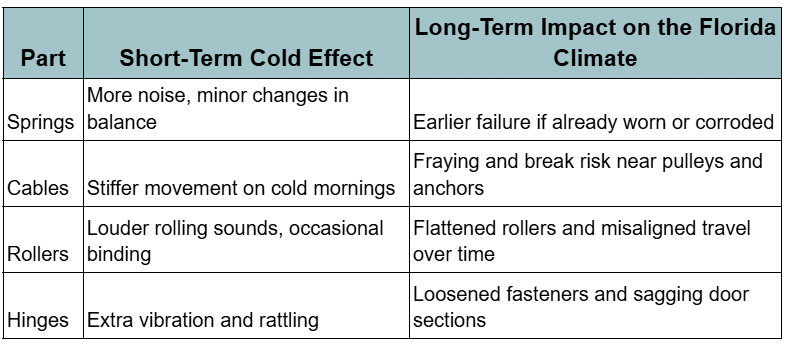
When you notice these patterns returning every cool season, it is a strong sign that it is time to schedule professional garage door repair rather than waiting for a full breakdown during a busy morning.
How Cooler Weather Impacts Safety And Reliability Over Time
Safety and reliability go hand in hand. A door that used to operate quietly but now rattles, jerks, or hesitates often signals that a part of the system is under increased tension or no longer aligned correctly. Cooler weather tends to highlight these concerns.
Long-term safety considerations affected by cooler weather include:
- Unbalanced doors
A door that feels heavier or fails to stay midway can strain the opener and increase the chance of sudden movement. - Worn safety cables or brackets
Over time, hardware that anchors cables and springs can weaken, especially in coastal environments. - Compromised photo-eyes and safety systems
Vibrations and movement through seasons can misalign sensors, which may change how the opener responds when something is in the door’s path.
National safety guidance consistently reminds homeowners that automatic doors and heavy moving systems should be maintained by trained professionals, especially when high tension and electrical parts are involved. Agencies that address home and workplace safety treat commercial and residential overhead doors as systems that require careful, ongoing attention, particularly where colder conditions and daily use intersect.
Planning Preventive Maintenance For Florida’s Garage Doors
Because cooler weather affects garage door systems over the long term, a preventive mindset saves both time and worry. Instead of waiting for a breakdown, homeowners in Florida benefit from a yearly plan that aligns maintenance with the seasons.
A practical long-term plan might include:
- Annual professional inspection
A technician checks the spring balance, cable condition, roller wear, and opener settings, then advises how close the system is to needing replacements. - Seasonal observation by the homeowner
Note when new noises, slower operation, or uneven travel show up, especially right after cold fronts or storms. - Strategic upgrades
When a door or major part is aging, schedule replacement before the most demanding season, whether that is storm season or the cooler months when issues become more noticeable.
For a quick maintenance checklist that covers balance testing and basic safety steps, the International Door Association outlines simple garage door care routines for homeowners.
When To Consult A Garage Door Professional
Some changes, such as soft humming noises or minor temperature variations, are expected as a system ages. Others signal that it is time to bring in an expert before minor issues become serious safety concerns.
You should consult a garage door professional when:
- The door becomes noticeably heavier or more complicated for the opener to move.
- You hear loud snapping, grinding, or repeated popping noises.
- The door opens crookedly or leaves gaps at one side when closed.
- Springs or cables show visible damage or separation.
- Cold mornings repeatedly cause the door to stop partway.
Federal and state resources on home safety consistently recommend using trained technicians for work that involves high tension and heavy moving doors. A professional can explain which issues are immediate, which can be monitored, and how Florida’s mix of heat, humidity, and cooler spells is affecting your particular garage door system.
Cooler weather in Florida may arrive only in short bursts, but over many years, those bursts have a meaningful impact on garage door systems. Springs, cables, rollers, and openers all respond to repeated temperature swings, storm seasons, and daily cycles, and it is often on chilly mornings that hidden wear finally shows itself. When you understand how these small seasonal moments add up over time, it becomes easier to schedule inspections, plan replacements, and keep the garage operating safely through every phase of the weather cycle.
When you are ready for a professional to assess how well your garage door system handles Florida’s changing conditions, Dynamic Garage Doors can help with inspections, balancing, and long-term solutions that support your daily routine. Contact us or give us a call to schedule a visit with a technician who understands how cooler seasons interact with Florida garage doors year after year.
Frequently Asked Questions
Why do garage door problems seem worse on cold mornings?
Cold mornings tighten metal parts and stiffen seals. Any hidden wear becomes easier to notice, so noises, hesitation, and balance issues often appear strongest early in the day when temperatures are lowest.
Can short Florida cold snaps really shorten spring life?
Yes. Springs near the end of their cycle count are more likely to fail when they are colder and less flexible. Short cold snaps can be the final trigger for a spring that was already weakened.
What long-term signs suggest my garage door system is aging?
Common signs include louder operation, frequent opener strain, uneven movement, and panels that no longer meet the floor consistently. When these patterns repeat across seasons, it usually means the system is nearing the end of its reliable life.
Does cooler weather affect garage door openers, too?
Indirectly, yes. When springs and other hardware no longer balance the door properly, the opener carries a heavier load. Over years of cooler-season strain, this can wear out motors, gears, and drives sooner than expected.
How often should a garage door system be inspected in Florida?
We generally recommend a professional inspection at least once a year for daily-use doors. Homes with heavy usage or coastal exposure may benefit from more frequent visits, especially before or after major weather shifts. For a broader view of seasonal door care that you can pair with professional garage door inspections, this seasonal door maintenance checklist outlines simple checks homeowners can track as weather conditions change.
Is it safe to keep using a noisy garage door in winter?
Persistent noise is a warning sign. While the door might still move, continuing to use it without inspection can lead to damaged parts or sudden failure. We advise stopping use and scheduling a professional evaluation.
What role does lubrication play during cooler weather?
Proper lubrication helps rollers, hinges, and other moving parts glide more smoothly, even when metal contracts, when lubrication is old or missing, friction and noise increase, especially in colder conditions.
Can planning really extend the life of my garage door system?
Yes. Regular inspections, timely repairs, and strategic upgrades based on age and usage can significantly extend service life. Planning around Florida’s seasonal patterns makes it easier to address issues before they turn into emergencies.
When should I consider replacing instead of repairing?
Replacement becomes sensible when the door or hardware is older, requires frequent repairs, or no longer meets your safety or performance needs. A technician can explain whether continued repair or full replacement is the most practical long-term choice.