

Florida homes experience more than sunshine and humidity. Over the course of a year, neighborhoods experience heat, heavy rain, hurricane season, cold fronts, and dry, breezy days. Each of these conditions leaves a mark on roofs, walls, outdoor areas, and the spaces you rely on the most, including garages and entries.
When seasonal weather changes pile up, they can affect comfort, safety, and the lifespan of key systems. The way your roof sheds rain, how your residential garage doors move in cooler air, and how air flows through the home all respond to this cycle. Understanding that pattern makes it easier to plan maintenance at the right time rather than react to problems when they are already urgent.
How Florida Seasons Shape Everyday Home Comfort
Florida has a unique pattern: long warm periods with high humidity, a defined hurricane season, and shorter spells of cooler, dry air. Homes are designed mainly for heat and moisture, yet each shift brings its own set of comfort issues.
Homeowners often notice:
- Rooms that feel warmer on the sunny side of the house
- Garages that turn hot in summer and cool quickly in winter
- Interior spaces that seem louder during storms or windy days
- Doors and windows that feel draftier after each cold front
Over time, these repeated changes can highlight where air is leaking, where insulation is thin, and where moving parts such as garage doors are starting to show wear.
If you want to see precisely how those colder mornings affect one critical opening, set aside time after this guide to read “How Cold Weather Affects Your Garage Door Springs,” so you can connect seasonal comfort issues with how your garage door hardware responds.
Summer Heat, Storms, And Structural Wear
Summer in Florida brings long, hot days and intense storm activity. Roofs, siding, exterior doors, and garages absorb heat for many hours before enduring sudden downpours and high winds. That cycle repeats for months and can gradually change how the home performs.
Typical summer impacts include:
- Roofing and attic areas
Shingles and underlayment expand and contract as roofs heat up and cool down. Over time, this can weaken edges and flashing, especially if previous storm damage was never addressed. - Windows and exterior doors
Frames can swell slightly in heat and humidity. Older seals and weatherstripping may not sit as tightly as they once did, allowing more warm air inside. - Garage doors and openers
Heat affects metal tracks, springs, and rollers. If the door is already misaligned or the opener is working harder than it should, summer demands can accelerate wear and cause louder operation.
During this season, scheduling garage door service can help ensure the door continues to move correctly despite the combination of heat and frequent use.
For a broader view of how cooler months interact with these summer conditions inside the living space, be sure to read How Florida’s Colder Weather Affects Homes.
Cooler Months, Garages, And Attached Spaces
Florida’s cooler months bring shorter bursts of cold air rather than a long winter. Even so, those bursts can significantly affect garages, entries, and rooms near exterior walls.
Common cooler-season concerns:
- Chilly rooms above or beside the garage
If the garage has gaps at the door or along walls, colder air can collect there and move into nearby rooms, making floors and walls feel noticeably cooler. - Garage doors that behave differently
Springs and metal hardware can contract. Existing wear becomes more noticeable, and doors may move less smoothly or make sharper noises early in the morning. - Condensation and indoor air shifts
When warm indoor air meets cooler surfaces, homeowners may notice more condensation on glass or metal, especially in poorly insulated areas.
When these signs appear, we usually advise a professional garage door repair visit before daily routines are disrupted by a door that refuses to open.
If you want to understand how this pattern of cooler mornings adds up over many seasons, you will find more detail by reading The Long Term Impact Of Cooler Weather On Florida Garage Door Systems after this guide.
Seasonal Patterns And Their Effects On Florida Properties
Each type of weather leaves its own mark. Together, they create a pattern that slowly shapes how a Florida home ages and how it feels to live in it.
Here is a general comparison:
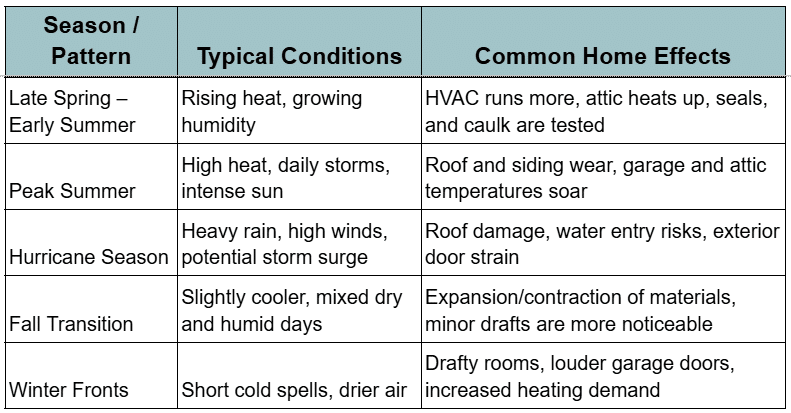
Even in a warm state, national energy guidance notes that sealing the home’s envelope and managing heating and cooling loads year-round can support lower energy use and better comfort. When you connect these seasonal patterns to how your own home feels, it becomes easier to decide which upgrades or professional services deserve priority.
Planning Maintenance Around Florida’s Weather Cycle
Rather than treating maintenance as a reactive response to emergencies, Florida homeowners benefit from aligning inspections and services with the seasons. This can help catch wear before storms arrive and fine-tune comfort before cooler fronts move in.
A simple seasonal plan might include:
- Late spring
- Check the roofing and gutters for any issues left from the previous year.
- Have doors and windows inspected for air leakage before peak heat.
- Early summer
- Confirm that your cooling system is ready for heavy use.
- Ask a garage door technician to check springs, tracks, and openers before storm season.
- Peak hurricane season
- Confirm that exterior doors and their frames are secure.
- Make sure the garage door closes tightly and moves without binding.
- Fall
- Have a professional review insulation and sealing, especially in drafty rooms.
- Plan any structural or door adjustments before you rely on heating.
- Winter fronts
- Pay attention to new noises or performance changes at the garage door and other exterior openings.
- Note any rooms that feel persistently cold or uncomfortable.
Florida coastal retrofit guidance mirrors this, warning that garage door failure can destabilize the entire structure and should be addressed as part of storm preparation.
In many cases, the average cost depends on the size of the home, the age of the existing systems, and how many upgrades are done at once. Spreading projects over several seasons often feels more manageable while still moving the property toward better comfort and resilience.
Weather, Risk, And Long-Term Property Health
Seasonal weather changes in Florida are not just about comfort. They are also about risk—especially from storms, extreme heat, and the occasional strong cold front. These events can damage materials, shorten the lifespan of mechanical systems, and make daily routines more difficult if key components, such as the garage door, fail.
Examples of long-term risks include:
- Roof leaks that start small during one season and expand in future storms
- Exterior doors that gradually warp or lose alignment after repeated temperature swings
- Garage doors that grow louder and less reliable as heat, humidity, and cool fronts test springs and hardware
- Exterior paint and finishes that fade or crack faster in high UV conditions
Federal and state agencies regularly remind residents that planning for severe weather and seasonal extremes is one of the most effective ways to protect property and routines over time. When your home maintenance schedule covers both structural areas and major access points, such as the garage, you are less likely to be surprised by a breakdown on a busy day or during an approaching storm.
When To Ask A Professional For Help
It can be tempting to ignore minor comfort issues or noises until they become unavoidable, but seasonal weather patterns often amplify them. Reaching out to a professional earlier usually reduces disruption and can help protect the home as a whole.
Consider contacting a qualified expert when you notice:
- A garage door that starts to move unevenly or hesitate during certain temperatures
- Rooms that remain much hotter or colder than the rest of the house across several seasons
- Doors or windows that no longer close smoothly or allow noticeable drafts
- Repeated minor leaks or stains that appear after storms or heavy rain
- Outdoor areas or structures that show visible wear after each storm season
An experienced technician or home professional can explain which issues are urgent, which can be planned for later, and how seasonal patterns may be influencing what you see. That clarity helps you decide how to prioritize repairs, inspections, and upgrades around Florida’s changing weather.
Seasonal weather changes in Florida create a repeating pattern of heat, storms, humidity, and cooler fronts that all shape how a home feels and how long its systems last. Roofs, windows, doors, garages, and attached rooms respond differently to each phase, and those responses become clearer when you pay attention to comfort, noise, and performance throughout the year. When you treat these signals as helpful feedback instead of occasional frustrations, you can plan maintenance that fits the climate rather than fighting it.
When you are ready for a professional opinion on how your garage door and its related parts fit into your broader seasonal plan, Dynamic Garage Doors can assist with inspections, balancing, and access solutions that support your daily routine. Contact us or give us a call to schedule a visit and discuss your concerns with a technician who understands Florida’s weather patterns.
Frequently Asked Questions
Why does my house feel so different from summer to winter?
Heat, humidity, and cooler air all change how your home retains temperature and how air moves. When seasons shift, gaps around doors, windows, and garages become more noticeable, and insulation differences between rooms become more pronounced.
Can seasonal weather changes really affect my garage door?
Yes. Heat, humidity, storms, and cold fronts all influence springs, tracks, seals, and openers. We frequently hear about louder doors, hesitation, or uneven movement that correlate with certain temperatures or times of year.
Which areas of my home are most affected by Florida’s seasonal shifts?
Garages, exterior doors, windows, attics, and rooms directly above unconditioned spaces are most affected. These locations sit closest to outdoor conditions, so they experience the strongest temperature and moisture changes during each season.
Do seasonal changes increase my energy bills?
They can. When air leaks, weak insulation, or worn seals are exposed by seasonal shifts, heating and cooling systems work harder to maintain comfort. Over time, that extra run time shows up as higher energy costs. For broader ideas on reducing energy use while staying comfortable through Florida’s seasonal swings, UF/IFAS Living Green shares practical energy-efficient living tips for homeowners.
Should I adjust my maintenance schedule based on Florida’s weather patterns?
Yes. We recommend planning roof, door, and insulation inspections around key times of year, such as before peak summer heat and after the most active storm periods. Aligning maintenance with weather patterns helps prevent avoidable issues.
How do storms during hurricane season affect the home over time?
Even when a storm does not cause noticeable damage, repeated exposure to wind and heavy rain can weaken roofing edges, siding, and exterior doors. Minor issues can grow larger in later seasons if a professional never evaluates them.
Why do rooms near the garage feel different as seasons change?
Garages often have more air leakage and temperature swings than interior spaces. Those changes can transfer into nearby rooms, especially above the garage. Seasonal shifts simply make that difference easier to feel.
When should I contact a professional about seasonal comfort problems?
If certain rooms remain uncomfortable across multiple seasons, or if doors and garages start behaving differently, it is a good time to call. We can evaluate whether the issue is structural, mechanical, or related to air movement.
Can planning around seasonal changes really extend the life of home systems?
Yes. When you schedule inspections, repairs, and upgrades to align with Florida’s weather cycle, you reduce unnecessary wear and the need for emergency repairs. That approach usually helps major systems, including garage doors, perform reliably for an extended period.