
Cold mornings in Florida may be short, but they still change how your garage door behaves. When cooler air moves in, metal parts contract, lubrication can thicken, and the door may feel different compared to a mild afternoon. For a busy homeowner, that can mean a door that opens more slowly, makes new noises, or refuses to move right when it is time to leave.
Because the garage often serves as a primary entry to the home, reliable access and security matter every day. Choosing quality residential garage doors and understanding how cold spells affect the springs behind the scenes helps you stay ahead of surprise problems. This guide explains how cold weather affects garage door springs in Florida, the warning signs to watch for, and when you should bring in a professional technician.
What Garage Door Springs Do In Your Florida Home
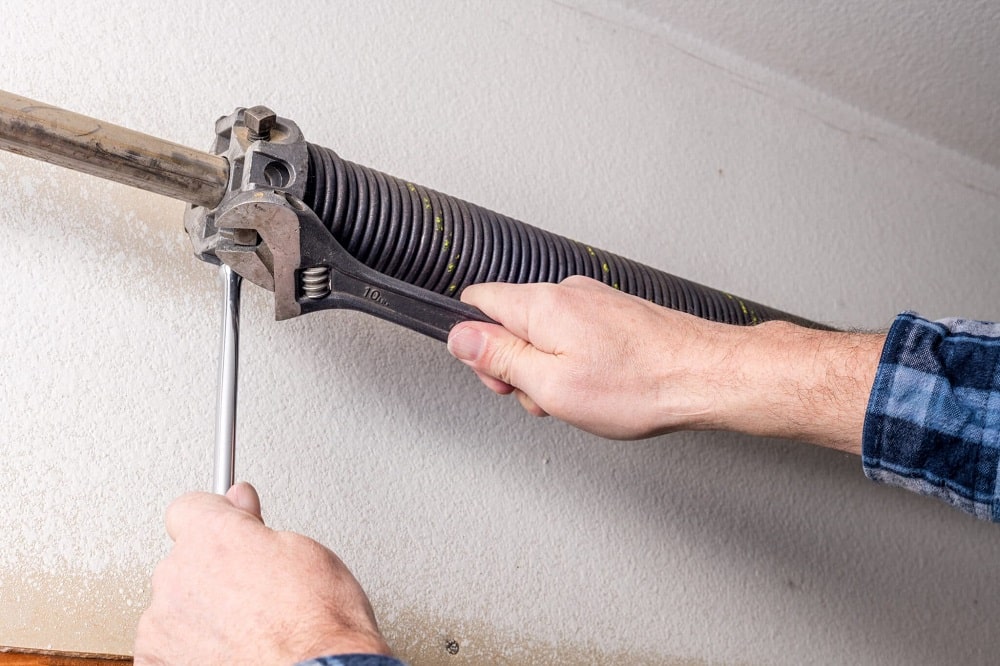
Garage door springs are the primary force that balances the door’s weight. The opener controls movement, but the springs handle most of the lifting when the door opens and closes. When they are sized and adjusted correctly, the door feels lighter, moves smoothly, and places less demand on the opener.
You will usually see one of two types:
- Torsion springs
- Mounted above the door opening on a steel shaft
- twist to store energy as the door closes
- Release that energy to help lift the door as it opens
- Extension springs
- Installed along the tracks on each side of the door
- Stretch when the door closes and contract as it opens
- Assist with lifting, especially on smaller or lighter doors
Both styles are designed for a limited number of open-and-close cycles and can be affected by age, corrosion, and seasonal temperature shifts. In Florida’s cooler mornings, the same springs handle the same door weight, but metal contraction can reveal weak coils or surface damage that went unnoticed during warmer months.
Over time, this combination of metal fatigue and seasonal change influences how the whole home feels in winter, so if you want to see how it extends beyond the garage, make time to read How Florida’s Colder Weather Affects Homes.
First Cold Snap Checklist For Your Garage Door
When the first truly chilly mornings arrive, a short routine can help you find early signs of trouble before a busy day is disrupted by a door that will not cooperate. This simple check does not replace a professional service visit, but it does help you decide when it is time to schedule one.
Use this quick checklist:
- Listen during the first open-and-close cycle for new scraping, popping, or grinding sounds.
- Watch whether the door moves at a steady, even speed without jerks or hesitation.
- Check that the opener starts the door promptly after you press the wall button or remote.
- Confirm that the door closes fully and seals against the floor without bouncing back open.
- Step back and see whether the door hangs straight in the opening when it is halfway open.
If more than one concern appears during this routine, a professional garage door service visit can keep the system operating smoothly through the colder period.
Cold Morning Versus Mild Day Comparison
Use this table to compare how your garage door behaves on a mild day versus a chilly morning:
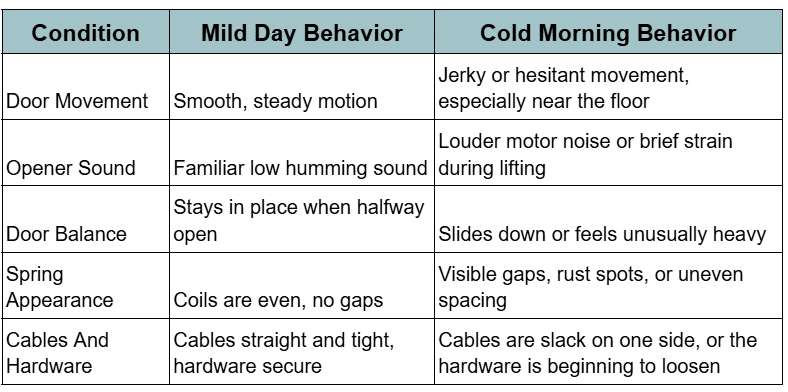
If your observations match the right-hand column more often than the left, you will get even more value by reading How Seasonal Weather Changes Affect Florida Residential Properties, which shows how these early cold-snap checks fit into a year-round maintenance plan for your entire home.
Clear Signs Cold Weather Is Affecting Your Springs
Cooler temperatures do not instantly damage healthy springs, but they often expose springs that are already near the end of their service life. Because springs hold heavy tension, any change in their behavior warrants attention.
Watch for these specific signs:
- A sharp snap or bang from inside the garage, followed by a door that will not move
- A visible gap in a torsion spring above the door opening
- Cables hanging loosely or appearing uneven on one side of the door
- A door that rises only a few inches before stopping or reversing
- A door that feels much heavier than usual when you try to move it manually
These signals indicate the springs are no longer supporting the door as they should. Continuing to use the opener in this state can damage the motor, gears, tracks, and other parts of the system.
For additional spring-related safety guidance for homeowners, the Door & Access Systems Manufacturers Association (DASMA) highlights why replacing worn garage door springs promptly is so important for safe operation.
A trained technician can:
- Confirm whether a spring is broken, worn, or incorrectly balanced.
- Perform safe garage door repair.
- Inspect cables, rollers, hinges, and opener settings for related issues.
Some of these problems begin as small changes that repeat over several winters, so if you want to understand how that pattern builds over years of use, read The Long Term Impact Of Cooler Weather On Florida Garage Door Systems for a deeper, long-range view.
How Cooler Florida Weather Affects The Whole Door System
Springs are just one part of a larger garage door system. When temperatures dip, other parts respond as well, especially in garages that are partially exposed or not fully insulated, like the main living areas.
Common cold-weather effects include:
- Rollers and hinges may tighten slightly as metal contracts, creating new squeaks or rattles.
- Cables with minor wear can stiffen and move less smoothly along pulleys.
- Door panels may shift just enough to brush against weather seals or tracks.
- Weatherstripping can become stiffer, affecting how tightly the door closes along the edges.
- The opener motor may work harder to move the same weight through cooler air.
Seasonal Habits To Help Protect Your System
Professionals must handle high-tension springs, but homeowners can still follow a few seasonal habits that support the entire garage door system:
- Schedule regular inspections so a technician can check springs, cables, and rollers before and after the coldest part of the year.
- Keep the tracks and the opener area clear of storage items to maintain a safe space around moving parts.
- Check safety sensors near the floor to confirm they remain aligned and free of debris.
- Notice patterns in door movement after major temperature changes and write down any new sounds or behaviors.
- Discuss upgrade options with your technician if the door is older, unusually heavy, or used frequently by your household.
National winter readiness guidance encourages preparing your home for seasonal weather rather than reacting after a breakdown, and that plan should include the garage door as a key access point. Treating the door as part of your yearly maintenance checklist makes it easier to keep these habits.
When To Call A Garage Door Professional
Some cold-weather changes fade as the day warms, but others indicate it is time to contact a professional right away. Because springs carry heavy tension, waiting too long can lead to sudden failures at inconvenient times.
Call a qualified garage door technician if you notice:
- A spring that is visibly broken or separated
- A door that will not open or close, even after you reset the opener
- The opener motor runs while the door remains still
- A door that becomes crooked or tilted while it is moving
- New grinding, scraping, or popping noises on every cycle
A professional has the training and tools to adjust, replace safely, and balance springs, and to check the rest of the system for hidden wear. This combination of expert inspection and targeted repair helps restore safer, smoother operation through future cold spells.
Cold weather in Florida may come and go quickly, but the way it affects garage door springs can influence how your door performs all year. By following a short cold-snap checklist, paying attention to early warning signs, and keeping up with seasonal habits, you can reduce the risk of sudden breakdowns and keep the garage operating more reliably. When you connect this spring-focused information with guides that discuss the broader impact of cooler weather and seasonal shifts on Florida homes, your garage becomes a planned part of home care instead of a recurring source of surprises.
When you decide it is time for an expert to inspect your system, Dynamic Garage Doors offers assistance with spring balancing, detailed inspections, and reliable access solutions designed for Florida homeowners. Contact us or give us a call to schedule a visit with a technician who understands how local weather affects garage doors over time.
Frequently Asked Questions
What is the clearest sign that my garage door spring has broken?
A loud snap, followed by a door that will not open, is the most common sign. You may also see a visible gap in the spring. When this happens, stop using the opener and schedule an inspection.
Why does my garage door feel heavier when the temperature drops?
Cooler air can cause weakened springs to lose some lifting ability. When that happens, the opener and any manual effort must handle more weight, making the door feel unusually heavy and harder to move.
Is it safe to use my opener if I suspect a broken spring?
No. The opener cannot safely lift the full door weight without spring support. Continuing to use it can damage the motor, gears, or tracks. It is safer to stop the operation until a technician evaluates the system.
How often should garage door springs be checked in Florida?
We recommend at least one professional inspection per year, especially in coastal or humid areas. Regular checks help identify wear early, so springs do not fail during colder mornings or periods of heavy use.
Can I inspect my garage door springs myself?
You can observe from a distance and note rust, gaps, or sagging cables, but you should never touch or adjust springs. They hold high tension and require proper tools and training to handle safely.
Why is my garage door noisier in colder weather?
Metal rollers, hinges, and springs contract slightly in cooler air, which increases friction and vibration. That change often leads to squeaking, rattling, or grinding sounds during operation, especially on the first cycles of the day.
Can cold weather damage my garage door opener?
Cold weather mainly affects springs and hardware, but the opener can be stressed indirectly. If weakened springs stop supporting door weight, the opener works harder than designed, which can wear out the motor or drive components.
What should I do if my garage door will not open on a cold morning?
Stop using the opener and avoid lifting the door by hand. From a safe distance, note any broken parts or unusual sounds, then contact a garage door technician to diagnose the issue and recommend safe repairs.
How can I reduce the chance of spring problems next winter?
Schedule regular inspections, address minor issues promptly, and track any changes in how the door moves or sounds. Keeping up with seasonal maintenance lowers the risk of sudden spring failures during colder months.