

Garage door openers in DeLand can run normally for months, then suddenly start reversing after a quick power flicker. If you are seeing the door start down and pop back up, or stop and reverse near the floor, it usually means the opener thinks it detected a safety issue or unusual resistance.
In Florida, power flickers are often tied to thunderstorms, brief utility resets, or neighborhood line work. Even a short flicker can reboot an opener, interrupt a closing cycle, or expose a weak sensor signal. Heat and humidity add another layer by increasing friction in the door system. The result can feel random, but in most cases, the opener is reacting to a specific trigger.
Safety First Before You Inspect Anything
- Clear the opening and the floor near the bottom seal
- Keep kids and pets away from the door area
- Use the wall control and watch one full cycle, start to finish
If you suspect sensors, read Garage Door Opener Sensor Alignment in Florida: Stop False Reversing.
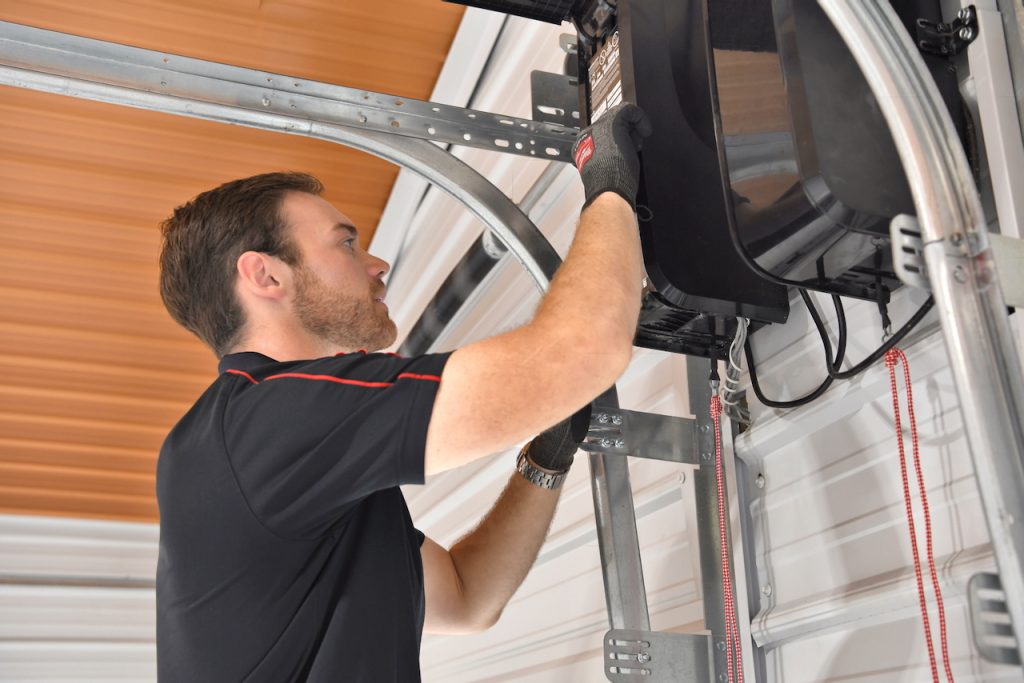
Common Causes After Florida Power Flickers
After a storm or brief power flicker in DeLand, an opener can restart with higher sensitivity to safety signals and resistance. That is why a door that was closing normally can suddenly start reversing.
Safety Sensor Beam Interruption
- What you notice: The door starts closing, then reverses like something crossed the opening.’
- Why it shows up after flickers: A reboot makes the opener extra dependent on clean sensor signals. DASMA explains how photoelectric safety sensors help prevent unsafe closing by triggering the opener’s safety reverse when the beam is interrupted.
- Safe check: Wipe both lenses and make sure the brackets are solid, not twisted.
- Call a technician if: The sensor is cracked, the bracket is bent, or the wire is pulling loose.
Loose Or Damaged Low-Voltage Sensor Wiring
- What you notice: Works one cycle, reverses the next with no clear pattern.
- Why it shows up after flickers: Weak connections drop the signal when the system restarts.
- Safe check: With power off, inspect sensor wires for pinches, abrasion, or tight staples. IDA recommends sticking to basic homeowner checks and contacting a trained technician when wiring concerns or safety risks are involved.
- Call a technician if: You see exposed copper, melted insulation, or a loose connection at the opener.
Sun Glare On The Sensors
- What you notice: Reversing happens at certain times, often late afternoon.
- Why it is common in DeLand: Bright sun plus humidity haze can wash the beam signal.
- Safe check: Track the time and sun angle when it happens.
- Call a technician if: You need bracket repositioning or shielding.
LED Lighting Interference
- What you notice: Random reversing or inconsistent behavior, especially after power returns.
Why it happens: Some LED drivers create electrical noise that confuses the system. - Safe check: Turn off nearby LEDs and test one cycle.
- Call a technician if: You need a compatible bulb or lighting recommendations for your opener.
Track Debris After Storms
- What you notice: The door hits a “rough spot” and reverses.
- Why it is common in DeLand: Wind-driven grit and leaves collect low in the tracks.
- Safe check: Inspect and clear debris near the floor corners of the tracks.
- Call a technician if: The track is dented or a roller looks off track.
Humidity-Related Door Binding
- What you notice: Door rubs, drags, or sounds tight, then reverses.
- Why it worsens after flickers: Quick repeat cycling after power returns increases strain.
- Safe check: Listen for rubbing and inspect door edges and seal for drag marks.
- Call a technician if: The door shudders, jerks, or stalls.
Travel Limits Acting Unreliable After A Reset
- What you notice: Reverses near the floor or stops short and returns up.
- Why it shows up after flickers: A mid-cycle reset can make travel behavior inconsistent.
- Safe check: Note if it reverses in the same spot each time.
- Call a technician if: The door hits hard at the bottom or closes unevenly.
Force Sensitivity Too High For Current Resistance
- What you notice: Reverses early, especially on humid or hot days.
- Why it is common in Florida: Heat and humidity increase friction and resistance.
- Safe check: Do not adjust settings, just note how far it goes before reversing and when it happens.
- Call a technician if: Reversing repeats or the door moves harshly on the return.
Door Balance Changes Increasing Strain
- What you notice: Opener sounds strained, and reversing becomes frequent.
- Why flickers expose it: Testing after a flicker reveals a door that is harder to lift than it should be.
- Safe check: Look for an uneven bottom gap and watch for side-to-side lag.
- Call a technician if: The door is uneven or you suspect spring or cable issues.
Worn Rollers Creating Drag
- What you notice: Squealing, rattling, grinding, then reversing.
- Why Florida accelerates it: Humidity and grit speed up wear and add friction.
- Safe check: Inspect rollers for cracks, wobbles, or chipped edges.
- Call a technician if: A roller is damaged or the door wobbles in the tracks.
Track Misalignment Or Rubbing
- What you notice: Rubbing sound in one section, then reversing.
- Why it feels sudden: Flickers do not cause it, but they often make you notice it.
- Safe check: Look for shiny rub marks on trthe ack or door edges.
- Call a technician if: Track alignment looks visibly off.
Bottom Seal Or Threshold Drag
- What you notice: Catches near the floor and reverses.
- Why it is common in DeLand: Rain plus grit builds up right at the closing line.
- Safe check: Clear gritty buildup where the door meets the floor.
- Call a technician if: The seal is torn, the threshold is warped, or the door closes unevenly.
Opener Heat Strain After Repeated Cycling
- What you notice: Works once, then starts acting inconsistently or reversing.
- Why Florida matters: Hot garages push electronics toward their limit, and repeated cycling adds stress.
- Safe check: Let it cool down, then test again later.
- Call a technician if: The opener hums without moving or reversing becomes constant.
For Florida climate patterns that make reversing more common, read Why Garage Door Openers Randomly Reverse in Florida Heat and Humidity.
How To Reduce Random Reversing In DeLand Without Doing Repairs
- Keep sensor lenses clean and the sensor path clear
- Inspect tracks during storm season and clear debris near the bottom corners
- Avoid rapid repeat cycling after a power flicker
- Watch for patterns tied to afternoon sun, heat, and humidity
- Consider surge protection as part of garage electrical safety planning
- Pay attention to new sounds early, before reversing becomes frequent
If your goal is a full inspection plan and repair pathway, read Garage Door Opener Repair in Florida: Stop Random Reversing.

Restore Reliable Garage Door Operation After Storm Flickers
If your opener started reversing after Florida power flickers, begin with the safe inspection checks above. If you see harsh movement, uneven travel, track damage, cable concerns, or repeated reversing that does not improve, stop using the opener and schedule service.
For professional diagnosis in DeLand, Dynamic Garage Doors can inspect sensor behavior, door balance, track condition, and opener electronics as one system. Contact us or give us a call to schedule service so your garage door closes reliably again.
Frequently Asked Questions
Why does my garage door reverse near the floor?
This often points to travel behavior, bottom seal drag, threshold resistance, or sensitivity to resistance near close.
Can a power flicker reset my opener settings?
A flicker can reboot an opener and sometimes expose travel or force behavior that was already borderline, even if it does not fully erase settings.
Is random reversing dangerous?
It can be. Reversing is a safety response. If the door slams, shakes, or looks uneven, stop operation and schedule service.
Why is it worse during afternoon storms in Florida?
Storms bring power flickers, wind debris, and humidity changes all at once, which can trigger sensors and increase door resistance.
Can dirty tracks cause reversing?
Yes. Debris can create a resistance spike that triggers the opener’s safety response.
Should I adjust force settings myself?
Only if you have the exact manual steps for your model and understand the safety risk. If you are unsure, it is safer to have a technician handle it.
Why does my opener work fine in the morning but not later?
Heat, sun glare, and humidity can change resistance and sensor performance as the day warms up.
What signs suggest a spring or balance issue?
Uneven travel, a crooked closed position, louder strain sounds, or visible cable unevenness can point to balance concerns. Springs are hazardous to handle.
When should I stop using the opener completely?
Stop if the door slams, shudders, twists, appears uneven, or if you see track damage or cable concerns. Those conditions can become unsafe quickly.